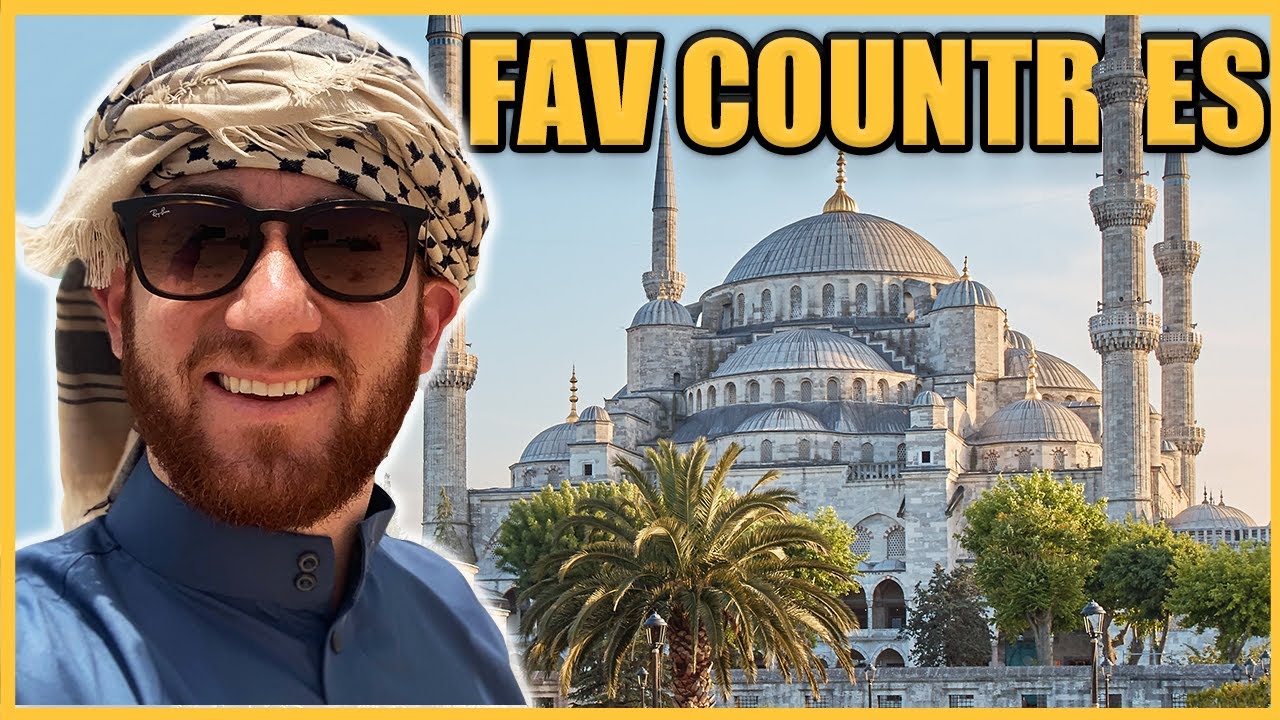
I’ve been wanting to make this video since I crossed the finish line into my 197th and final country – SAUDI ARABIA!
Traveling to every country on Earth is a feat so rare that as of 2026, fewer than 500 people have officially done it—that’s fewer people than have been to space.
When you cross the 197th border (the 193 UN member states plus Vatican City, Palestine, Kosovo, and Taiwan), your perspective on humanity shifts fundamentally. Here is what that journey actually looks like, beyond the highlight reels.
🌍 The “Universal” Human Experience
The biggest takeaway from extreme travelers (like Drew Binsky, Jessica Nabongo, and the Criders) isn’t how different we are, but how similar.
-
The “99% Rule”: Regardless of the political climate, 99% of people everywhere are kind, curious, and just want to provide for their families.
-
Kindness as a Currency: In countries often labeled “dangerous” (like Pakistan, Iran, or Sudan), travelers consistently report the highest levels of hospitality, often being invited into homes for tea or meals by complete strangers.
🏆 The Standout Destinations
Across 197 countries, certain places consistently rank as the “best” for specific reasons:
-
The Most Beautiful: Namibia (for the surreal dunes of Sossusvlei), Argentina (for the wild peaks of Patagonia), and the Philippines (for having over 7,000 of the world’s best islands).
-
The Most Surprising: Uzbekistan is a 2026 favorite for its silk-road architecture (Samarkand) and safety, while Oman is cited as the most underrated country in the Middle East for its rugged beauty and friendliness.
-
The “Time Machine”: Yemen (specifically Socotra Island or the old city of Sana’a) is often described as the closest thing to stepping back in history.
⚠️ The “Hardest” Parts (The Reality Check)
It isn’t all sunsets and silk roads. The quest for 197 involves significant mental and physical grit:
-
The “Worst” Stops: Cities like Conakry (Guinea), N’Djamena (Chad), and Delhi (India) are frequently cited by “all-country” travelers as the most exhausting due to pollution, extreme heat, or intense security/scam environments.
-
Visa Hell: The hardest part isn’t the travel; it’s the paperwork. Securing visas for places like Turkmenistan, Equatorial Guinea, and North Korea can take months of negotiation and thousands of dollars.
-
Travel Fatigue: By country 150, “temple burnout” is real. Travelers have to find deeper reasons to stay motivated, often shifting their focus from sightseeing to human-interest storytelling or specific missions (like finding the best street food in every nation).
📊 Summary of the Journey
| Category | The Reality |
| Duration | Usually 5 to 10 years of consistent movement. |
| Cost | Anywhere from $50,000 (ultra-budget) to $500,000+. |
| Safety | Generally safe, but involves “calculated risks” in conflict zones. |
| Diet | You will get food poisoning eventually. Charcoal tablets are a must. |
| The Result | A profound sense of “Global Citizenship” and a loss of fear. |